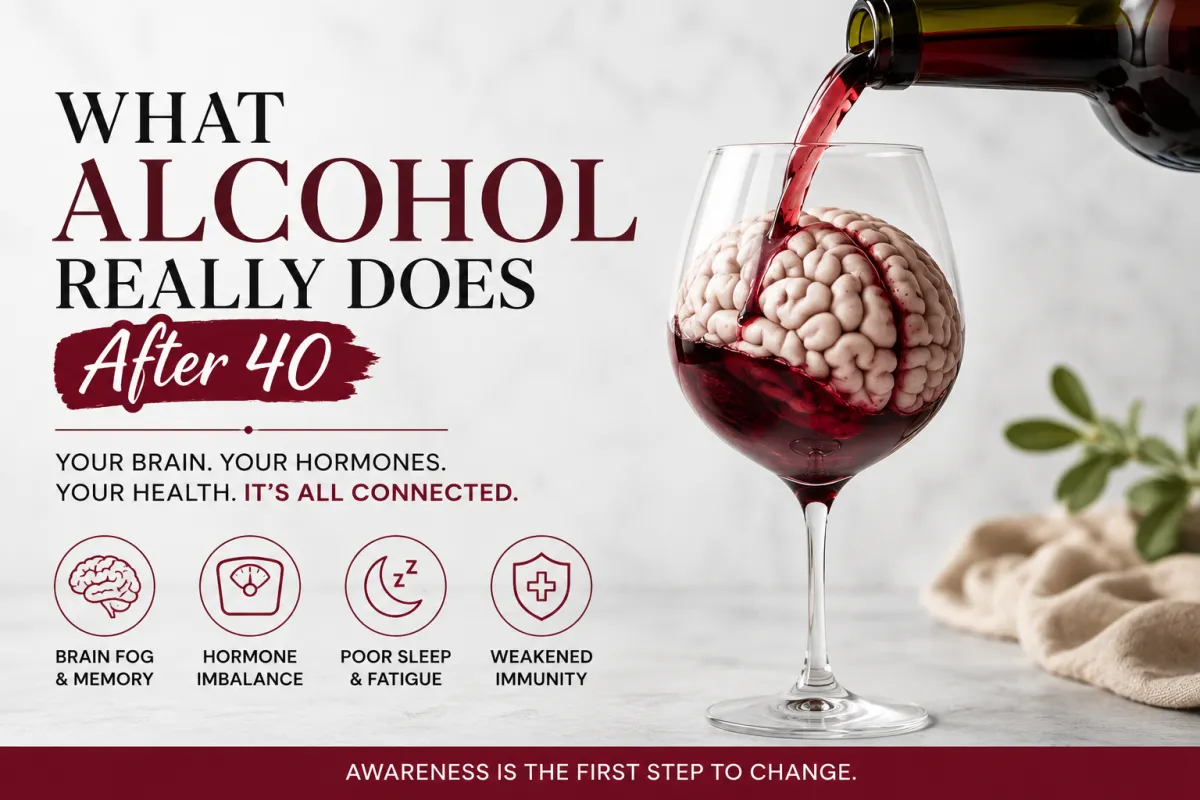
Alcohol After 40: Hidden Health Costs & How to Take Back Control | Dr. Betsy Greenleaf
Alcohol After 40: The Hidden Health Costs & How to Take Back Control
Why Drinking Affects Your Hormones, Sleep, Brain, and Long-Term Health
Published by Dr. Betsy Greenleaf | 40s Forward Podcast
Watch the Full Episode
Watch this conversation with Dr. Betsy Greenleaf and Maureen Benkovich.
Why That Glass of Wine Feels Different After 40
For many women, alcohol becomes woven into the fabric of everyday life.
A glass of wine after work. Cocktails with friends. Celebrations, vacations, holidays—even stressful days—often seem to revolve around alcohol.
But something changes after 40.
That drink that once helped you relax may now leave you waking at 3 a.m., feeling anxious, exhausted, overheated, and wondering why your body no longer responds the same way.
If this sounds familiar, you're not imagining it.
As hormones begin to shift during perimenopause and menopause, alcohol affects the body differently. At the same time, many women are juggling demanding careers, aging parents, teenagers, relationship changes, and increasing stress. Alcohol can quietly become a coping mechanism—not because someone has an alcohol addiction, but because it's become a habit that's deeply connected to everyday life.
In this episode of the 40s Forward Podcast, I sit down with Maureen Benkovich, Alcohol Freedom Coach, keynote speaker, author, founder of Sober Fit Chick, and host of the Sober Fit Life Podcast. Together, we explore why alcohol often becomes more problematic after 40, how it impacts hormones, sleep, brain chemistry, and healthy aging, and why you don't have to hit "rock bottom" before deciding to make a change.
Most importantly, this conversation isn't about guilt or judgment—it's about understanding the science behind alcohol, recognizing how it may be affecting your health, and empowering you to make choices that support the life you want to live.
In This Episode You'll Learn
✔ Why alcohol affects women differently after age 40
✔ How drinking impacts hormones, sleep, and metabolism
✔ The connection between alcohol and anxiety
✔ Why alcohol can quietly rob you of energy and confidence
✔ How habits and brain chemistry—not willpower—drive drinking patterns
✔ What it means to become "sober curious"
✔ Practical strategies for creating a healthier relationship with alcohol
Why Alcohol Hits Harder During Midlife
Many women notice they simply can't tolerate alcohol the way they did in their twenties or thirties.
That's because your body is changing.
As estrogen and progesterone decline, your metabolism shifts, muscle mass decreases, body composition changes, and the liver's ability to process alcohol may become less efficient.
Women also naturally produce lower levels of alcohol dehydrogenase—the enzyme responsible for breaking down alcohol—than men. This means alcohol reaches higher concentrations in the bloodstream and often remains there longer.
The result?
Even small amounts of alcohol may contribute to:
Poor sleep
Brain fog
Increased anxiety
Fatigue
Hot flashes
Weight gain
Slower recovery
Elevated inflammation
What once felt harmless can suddenly begin interfering with your health goals.
Alcohol Doesn't Just Affect Your Liver—It Affects Your Brain
One of the most fascinating parts of my conversation with Maureen was learning how alcohol changes brain chemistry.
Many people believe they drink because they're weak or lack discipline.
The science tells a different story.
Alcohol temporarily increases calming neurotransmitters, creating a feeling of relaxation. But as alcohol leaves the system, the brain rebounds by increasing stress hormones and excitatory neurotransmitters.
That's why many people experience:
Racing thoughts at night
Early morning awakenings
Anxiety the next day
Irritability
Cravings for another drink
As Maureen explains, it's not simply about willpower—it's about understanding how brain chemistry influences behavior.
Recognizing this shift can remove shame and help people approach change with curiosity rather than self-criticism.
Why High-Achieving Women Are Especially Vulnerable
One of the biggest misconceptions surrounding alcohol is that only people with severe addiction struggle.
In reality, many of the women Maureen coaches are successful professionals, entrepreneurs, executives, healthcare providers, and caregivers.
They've built impressive careers.
They're raising families.
They're taking care of everyone else.
And alcohol has quietly become the reward at the end of the day.
Over time, what began as occasional relaxation becomes an automatic response to stress, celebration, boredom, loneliness, or emotional discomfort.
Understanding these learned associations is the first step toward breaking them.
Signs Alcohol May Be Affecting Your Health
Alcohol doesn't always create dramatic consequences.
Sometimes its effects are subtle.
Ask yourself if you've noticed:
Waking between 2–4 a.m.
Poor-quality sleep
Anxiety after drinking
Low motivation
Brain fog
Weight gain
Increased belly fat
Reduced exercise recovery
Mood swings
Lower productivity
Reduced confidence
Feeling like alcohol has become your default stress relief
Many women are surprised how dramatically these symptoms improve after reducing alcohol—even without eliminating it completely.
The Sober Curious Movement: It's About Awareness, Not Labels
One of the most refreshing aspects of this conversation is Maureen's message that you don't need to identify as an alcoholic to examine your relationship with alcohol.
Instead, she encourages people to become sober curious.
That means asking questions like:
Why am I drinking?
How does alcohol actually make me feel?
Is it helping me—or hurting me?
What would my life look like if I drank less?
This mindset removes judgment and creates space for healthier choices.
For many people, simply becoming more intentional leads to better sleep, more energy, improved relationships, and greater emotional resilience.
How to Take Back Control
Creating a healthier relationship with alcohol doesn't have to mean perfection.
Small, sustainable changes often produce meaningful results.
Consider trying:
Alcohol-free weekdays
Tracking how alcohol affects your sleep
Finding non-alcoholic alternatives you enjoy
Practicing stress reduction through movement or meditation
Building supportive routines that don't revolve around drinking
Connecting with communities that encourage healthier habits
Seeking guidance if alcohol has become difficult to control
Progress is built through awareness—not shame.
Dr. Betsy's Perspective
One of the things I appreciated most about my conversation with Maureen is that she reframes alcohol through the lens of physiology instead of personal failure.
As someone who practices root-cause medicine, I see this same principle every day.
Whether we're talking about hormones, gut health, sleep, stress, or alcohol, symptoms rarely occur in isolation.
Our bodies are interconnected.
Alcohol doesn't just affect the liver—it influences hormones, inflammation, brain chemistry, metabolism, the microbiome, cardiovascular health, and even our relationships.
That doesn't mean everyone needs to stop drinking.
It means every woman deserves to understand how alcohol is affecting her unique body so she can make informed decisions that align with her health goals.
Knowledge is empowering.
When we replace guilt with education, lasting change becomes possible.
Frequently Asked Questions
Why does alcohol affect women more after age 40?
Hormonal changes, altered body composition, and changes in metabolism all influence how alcohol is processed, making many women more sensitive to its effects during midlife.
Can alcohol make menopause symptoms worse?
Yes. Alcohol may increase hot flashes, night sweats, anxiety, poor sleep, inflammation, and fatigue while making weight management more difficult for some women.
Do I have to quit drinking completely?
Not necessarily. Many people benefit from becoming more mindful about when, why, and how much they drink. Others choose complete abstinence because they feel significantly better without alcohol.
Why do I wake up in the middle of the night after drinking?
Although alcohol may help you fall asleep faster, it disrupts normal sleep architecture, often causing fragmented sleep, early morning awakenings, and reduced restorative sleep.
Episode Resources
Guest: Maureen Benkovich
Founder: Sober Fit Chick
Podcast: Sober Fit Life Podcast
Website: https://www.soberfitchick.com/
Social Media: Instagram, Facebook, & Linkedin
Listen Everywhere
🎧 YouTube
🎧 Apple Podcasts
🎧 Spotify
Ready to Feel Better After 40?
At the International Pause Institute, we believe healthy aging isn't about restriction—it's about understanding your body and making choices that help you thrive.
Our comprehensive, root-cause approach evaluates hormones, metabolism, gut health, inflammation, nutrition, sleep, stress, and lifestyle to uncover what's truly driving your symptoms.
Whether you're navigating menopause, struggling with fatigue, trying to improve sleep, or simply looking to optimize your health, we're here to help you create a personalized path toward lasting wellness.
Schedule your Discovery Consultation today and discover what your body has been trying to tell you.


